Oil Filled vs Fan Heater in India 2026: Which to Buy
Both turn every rupee of electricity into the same heat. The difference is how fast it arrives, how dry the room gets, and what happens after you switch off.
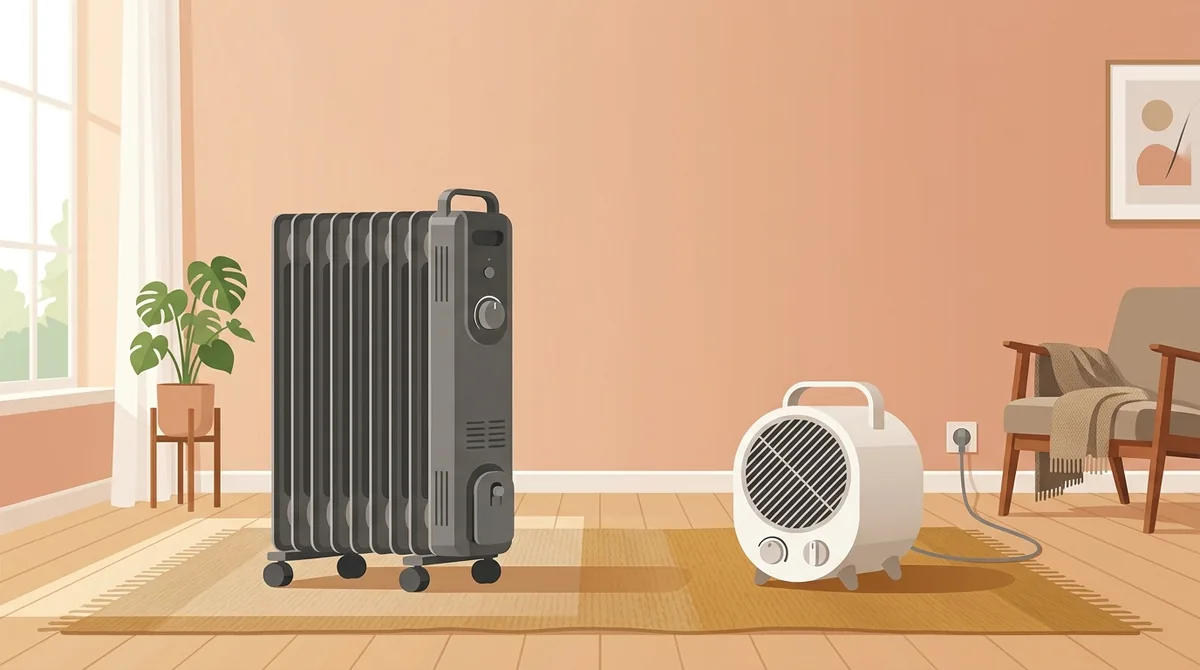
Quick Comparison
Quick answer
Quick answer: A fan heater warms a room in minutes, costs about a thousand rupees, and dries the air. An oil filled radiator takes half an hour, costs eight to twelve thousand, and stays comfortable all night. If you want heat for an hour in the evening, buy the fan heater. If you sleep with the heater on, buy the radiator.
Both turn the same electricity into the same amount of heat. Nobody is more efficient than the other in the way the adverts imply.
I compared four live listings on Amazon India on the day of writing, and I read the physics on electric resistance heating before I made any claim about running cost.
The efficiency claim is not what people think
This is the single most misunderstood thing about electric heaters, so it goes first.
Every electric resistance heater converts essentially all the electricity it draws into heat in your room. A 2000 watt fan heater and a 2000 watt radiator put out the same heat per hour.
So when a listing says a radiator is more efficient, it isn't talking about conversion. It's talking about how the heat is delivered and how long it lingers.
That's a real difference and it does affect your bill. It just isn't the difference the word efficient normally means. You can read the underlying point on electric heating.
What changes your bill is wattage and hours, not the shape of the machine.
What a night of heating actually costs
Here's the arithmetic, and you can put your own tariff into it.
A 2000 watt heater running flat out for one hour uses 2 units of electricity. At a middling Indian domestic rate of 8 rupees a unit, that's 16 rupees an hour.
| Setting | One hour | Four hours | Sixty nights |
|---|---|---|---|
| 1000 watts | 8 rupees | 32 rupees | 1,920 rupees |
| 2000 watts | 16 rupees | 64 rupees | 3,840 rupees |
| 2400 watts | 19 rupees | 77 rupees | 4,608 rupees |
Those are worst case numbers, because they assume the element never switches off.
In real use a thermostat cuts the power once the room hits temperature, so the true figure is lower. How much lower depends on how well your room holds heat.
Notice the first row. Running a two setting heater on 1000 watts halves the cost, and on a mild night it's enough.
Speed is the fan heater's whole argument
A fan heater blows air across a hot element, so the warm air reaches you immediately.
In a small bedroom you feel it within two or three minutes. In a bathroom, before you've undressed.
An oil filled radiator has to heat the oil, then the metal fins, then the air by convection. That takes twenty to forty minutes in a cold room.
So for short bursts the fan heater isn't just cheaper to buy. It's the right tool.
A radiator used for one hour a day is a waste of eleven thousand rupees. It spends most of that hour still warming up.
Why the radiator wins overnight
Three reasons, and they all matter more than they sound.
First, it's silent. No fan means no drone next to your head at two in the morning.
Second, it doesn't blow. A fan heater stirs up dust and pushes dry air at your face all night, which is why people wake up with a sore throat.
Third, the oil holds heat. Switch a radiator off and it keeps warming the room for a while. Switch a fan heater off and the room is cold in minutes. The mechanism is explained on the oil heater page.
Add those up over a full night and the radiator is genuinely more comfortable, even though the units on the meter are similar.
Both of them dry your room, one more than the other
Neither heater removes water from the air. What they do is raise the temperature, and warm air feels drier at the same amount of moisture.
The fan heater makes it worse by moving that air across your skin and your throat all night.
If you wake with a dry nose or cracked lips in winter, that's the cause, and no heater setting fixes it.
The cure is moisture, not less heat.
A cheap hygrometer tells you whether the room is genuinely dry or whether you just feel it.
Safety, and where each one is genuinely dangerous
A 2000 watt heater is one of the highest draw appliances in an Indian home, so this isn't a formality.
A fan heater has an exposed hot element behind a grille. It must never face a curtain, a bedsheet or a sofa, and it must never run unattended overnight.
A radiator has no exposed element and no fan, which makes it the safer choice in a room with a child or a pet.
Both should go straight into a wall socket. Not a multi plug extension, not a light duty extension board, not a spike guard rated for a laptop.
That single rule prevents most heater fires. A cheap extension board carrying 2000 watts gets hot enough to melt.
Room size decides more than you expect
A rough guide that holds up:
- Bathroom or a small study: a 1000 to 2000 watt fan heater is plenty.
- Normal bedroom up to about 150 square feet: either type works.
- Large bedroom or a hall: an oil filled radiator with 9 or more fins.
- Any room with high ceilings: expect both to struggle, and close the door.
The fin count on a radiator is the useful number. More fins means more surface area, which means it heats a bigger room, more slowly, and costs more.
Nine fins is the sensible middle for an Indian bedroom.
Buy both, if you are honest about it
This is what a lot of people end up doing and it isn't silly.
A thousand rupee fan heater in the bathroom for five minutes in the morning is excellent value. Nothing else warms a cold bathroom that fast.
An oil filled radiator in the bedroom for the night is the comfortable one.
Together that's about twelve thousand rupees and it covers both jobs properly.
One machine doing both jobs badly is the usual outcome of picking only on price. Our wider guide to room heaters covers the other types too.
What the listings do not tell you
Four things that come up in complaints rather than descriptions.
Oil filled radiators are heavy, often fifteen kilos or more. The castors help, but carrying one upstairs is a two person job.
They can tick and click as the metal expands. It's harmless and some people find it maddening.
A new radiator often smells for the first hour of its life. That's manufacturing oil burning off and it stops.
And a fan heater's thermostat is usually crude. It swings the room warm and cold rather than holding it steady.
How I picked these four
The usual short method, said plainly.
I checked that each listing was live and in stock on the day of writing. I read every rating and ratings count off the product page itself rather than the search results, because search cards mix numbers from neighbouring items.
I kept two of each type so the comparison is useful rather than a list of four similar heaters.
I haven't run all four through a winter in my own house, and I'm not going to pretend I have. This is a comparison of specifications, prices and what thousands of buyers rated.
Heater prices climb hard from October onwards, so check the live price before you order.
What to do now
Answer one question. How many hours a day will it run?
Under two hours, buy the fan heater and spend the difference on a blanket.
All evening and all night, buy the oil filled radiator and run it on the lower setting.
Either way, plug it into a wall socket directly. More winter picks sit on our shop page.
Frequently Asked Questions
Which uses less electricity, an oil filled heater or a fan heater?
At the same wattage they use the same electricity and produce the same heat. A 2400 watt radiator draws more per hour than a 2000 watt fan heater. The radiator can still cost less over a night because its thermostat cycles and the oil keeps radiating after the element cuts out.
How much does a 2000 watt heater cost to run per hour in India?
Two units per hour if it runs flat out, which is about 16 rupees at a middling rate of 8 rupees a unit. Your tariff may be higher or lower. Running the same heater on its 1000 watt setting halves that figure.
Can I leave an oil filled radiator on all night?
It is the safer of the two for overnight use, because there is no exposed element and no fan. Keep it clear of curtains and bedding, plug it into a wall socket rather than an extension board, and use the thermostat instead of the maximum setting.
Why does my room feel dry when the heater is on?
Warm air feels drier at the same amount of moisture, and a fan heater blows that air straight at you. Turning the heat down helps a little. Adding moisture helps more, and our humidifier guide covers what actually works.
How many fins should an oil filled radiator have?
Nine fins suits a normal Indian bedroom of up to around 150 square feet. Eleven or thirteen fins suit a hall or a large room. More fins heat a bigger space but take longer to warm up and cost more to buy.
Is it safe to plug a room heater into an extension board?
No. A 2000 watt heater draws more current than most extension boards and spike guards are built for, and the board gets hot enough to melt. Plug the heater straight into a wall socket every time, with nothing else sharing it.